C++20 physical modellingUniversity of Iowa calibratedDetmold spatial acoustics

Harpiria Woodwinds of Symphony

Eight orchestral woodwinds that respond instantly to the way you play. Real-time nonlinear waveguide physics, zero instrument samples and a native ~6.38 MB VST3 plug-in, with a standalone application included.

Harpiria / Flute SoloVST3
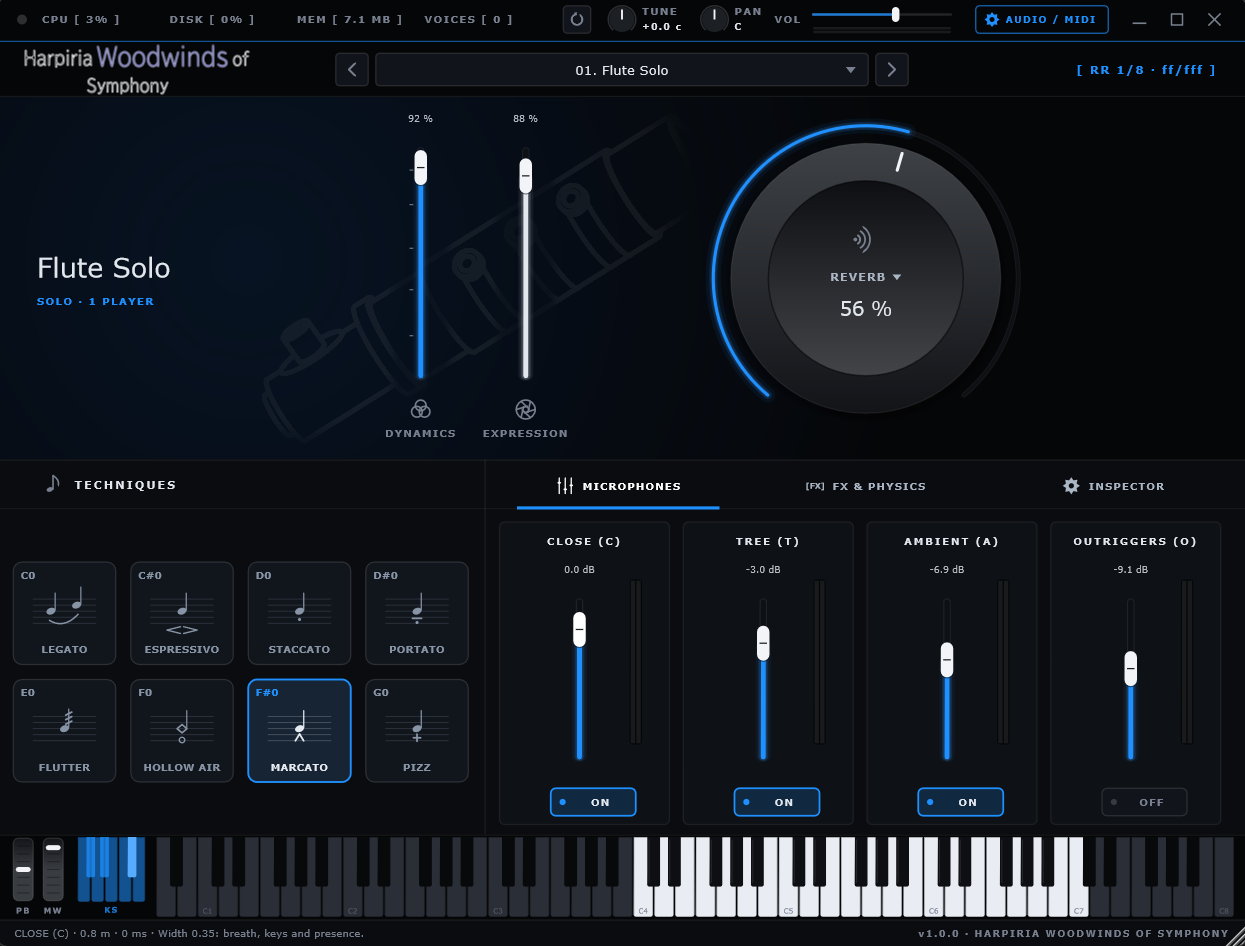
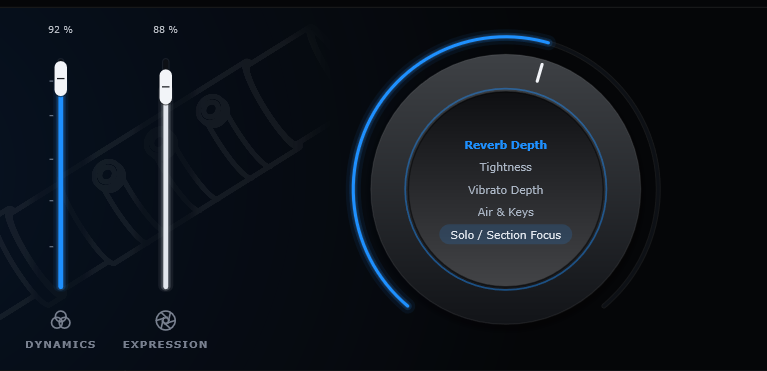
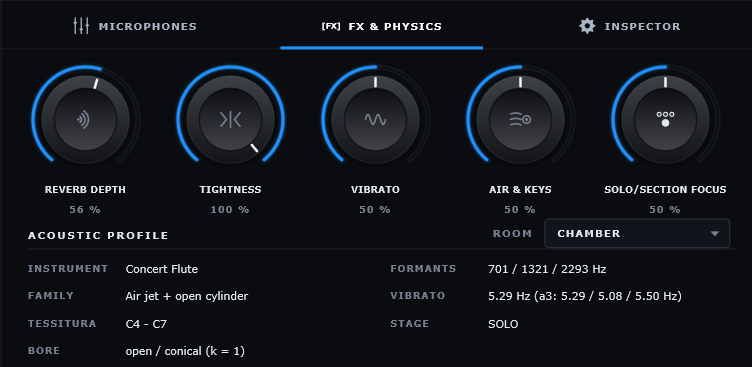
The Harpiria interface with Flute Solo selected, articulation controls, dynamics and expression faders, a reverb dial and four microphone channels
Explore the interfaceFlute Solo · Pro mixer

Sound Demos

Hear the room change.

Compare the same Ensemble a3 performances in the intimate Brahmssaal chamber and the expansive Konzerthaus Detmold hall.

Brahmssaal Chamber

Concert Flute

Listen for the breath at the start of each phrase and the chamber’s close early reflections.

  1. Concert FluteBrahmssaal ChamberA3
  2. Concert FluteKonzerthaus HallA3
  3. OboeBrahmssaal ChamberA3
  4. OboeKonzerthaus HallA3
  5. Clarinet in B♭Brahmssaal ChamberA3
  6. Clarinet in B♭Konzerthaus HallA3

Engineering & Acoustics

From the air column to the hall.

A real-time engine shaped by measured acoustics and the ear of an orchestral composer.

pp–fff · 60 ms

Nonlinear waveguide physics

Under the direction of Henrique “xanthoria”, breath pressure, key velocity and CC1/CC11 shape the physical model in real time. Harmonics evolve continuously from pp to fff. During a 60 ms fingered legato transition, overlapping notes within an octave share the same vibrating air column.

256 taps · minimum phase

University of Iowa reference calibration

The Musical Instrument Samples (MIS) anechoic archive informed formants, harmonic balance and vibrato. A 256-tap minimum-phase modal body convolution preserves invariant Grenadilla, European Maple and Silver resonance regions. Every instrument note uses pure synthesis.

2 measured rooms · 4 microphones

Detmold spatial acoustics

Measured impulse responses from Detmold University of Music capture the wood-panelled Brahmssaal chamber and the longer, enveloping Konzerthaus hall. The low-CPU Dattorro Economy Dark Hall and both measured rooms are distributed across four microphone perspectives, with smooth real-time reverb adjustment.

< 0.04 cents · AVX2 + FMA

Zero-allocation C++20 engine

Native JUCE 9 processing allocates no dynamic memory on the audio thread. Third-order Lagrange fractional delay and IntonationServo keep mean pitch error below 0.04 cents. Median single-core use was 2.16%–3.52% on an i5-1135G7. The engine was tested with ASan, UBSan and fuzzed session states.

Instruments & Articulations

Eight distinct woodwinds.

Every model has its own exciter, bore geometry and resonances. All ranges are at concert pitch, with C4 = MIDI 60.

InstrumentConcert rangeExciter & boreAcoustic signature
Concert FluteC4–C7Air jet, open cylindrical boreCrystalline brilliance, laminar breath noise and progressive vibrato.
Alto Flute in GG3–G6Wide air jet, open bore in GFull-bodied fundamental and a dark timbre above 2.2 kHz.
OboeB♭3–A6Double reed, narrow conical boreFocused nasal formant near 1.14 kHz and an incisive attack.
Cor AnglaisE3–C6Double reed, pear-shaped bellMelancholic resonance centred at 905 Hz.
Clarinet in B♭D3–B♭6Single reed, closed cylindrical boreSuppressed even harmonics in the chalumeau and brilliance in the clarion.
Bass ClarinetB♭1–E♭5Wide single reed, curved metal bellHollow sub-bass body at 335 Hz and metallic presence at 1.24 kHz.
BassoonB♭1–E♭5Long double reed, 2.5 m conical boreVocal third to sixth harmonics around the 500 Hz formant.
ContrabassoonB♭0–C4Heavy double reed, 5 m folded boreA low 29 Hz fundamental and cavernous formant at 250 Hz.

Velocity × CC1 & 8 round robins

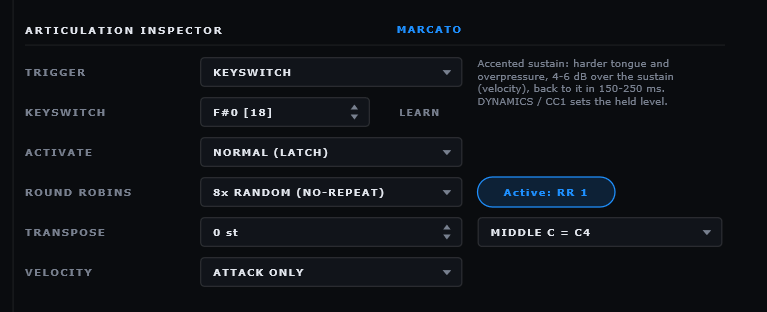
Velocity shapes the initial tonguing, whilst CC1 controls harmonic sustain. Eight physical round robins alternate dental and palatal strokes, with small changes in cane stiffness and physical release triggers.

8 articulations & editable keyswitches

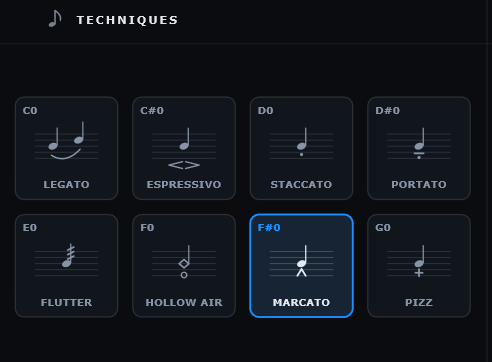
Legato / Sostenuto, Espressivo, Staccato, Portato / Tenuto, Flutter-Tonguing and Hollow / Overblown Air are included in Free. Pro adds Marcato, Pizz and editable keyswitches with MIDI LEARN. The first six can also use CC32 or Velocity Split.

Stage modes & 4-mic Haas mixer

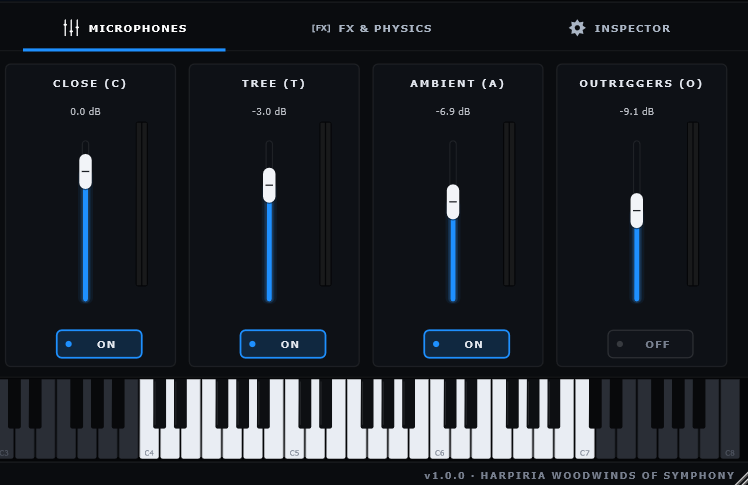
Play Solo, Ensemble a3 or Solo + a3. Auto-Divisi distributes chord voices across independent players. Close, Decca Tree, Outriggers and Ambient each carry a distinct stage perspective with individual DSP bypass.

Editions

One installer. Two editions.

Start with all eight instruments in Solo mode. Enter a Pro serial key in the plug-in to unlock the full stage immediately. After initial activation, Pro runs entirely offline.

Open-source AGPLv3

Free Edition

$0 USD

  • All eight instruments in Solo mode
  • Physical legato and hybrid vibrato
  • Six core articulations
  • One microphone and algorithmic Dark Hall
  • Runs without an account or licence key

Unsigned Windows installer. Microsoft Defender SmartScreen may flag it as an unrecognised app.

Download Free Edition

Installer download pending.

Commercial licence

Pro Edition

$50 USD · one-time purchase

  • Ensemble a3, Solo + a3, Auto-Divisi and Solo Topping
  • Close, Decca Tree, Outriggers and Ambient microphones
  • Measured Brahmssaal and Konzerthaus Detmold rooms
  • 24 presets and editable keyswitches with MIDI LEARN
  • Marcato and Pizz, for eight articulations in total

Unsigned Windows installer. Microsoft Defender SmartScreen may flag it as an unrecognised app.

Buy Pro Edition — $50

Polar checkout pending.

Specifications & FAQ

In your studio.

System & performance

PlatformWindows x64 · VST3 and standalone
CPU architectureAVX2 + FMA with automatic fallback
Binary size6.38 MB VST3 · 7.55 MB standalone, including Detmold IRs
Engine memory6.8 MiB static allocation
CPU, median2.16% Economy · 3.49% Chamber · 3.52% Hall
VST3 hostsREAPER, Cubase, Studio One, FL Studio, Ableton Live
Middle CC3 / C4 display toggle

MSVC AVX2 release build. CPU measured on one Intel Core i5-1135G7 core at 48 kHz, 128 samples.

Frequently asked questions

Does the instrument use samples?

Every note, tonguing transient, legato transition and dynamic variation is generated by real-time physical modelling. The two Detmold rooms use measured spatial impulse responses for reverberation.

Why use recordings from the University of Iowa?

The anechoic recordings provided a reference for calibrating formants, harmonic balance and vibrato. The plug-in ships without any of those recordings.

Do I need Kontakt or another player?

Harpiria runs natively as a Windows x64 VST3 plug-in or as a standalone application.

How do I upgrade from Free to Pro?

The same installer serves both editions. Enter your unique Pro serial key on the activation screen to unlock all Pro features. After initial activation, the instrument runs completely offline.

Why does my DAW label Middle C differently?

Cubase labels MIDI note 60 as C3. Harpiria also offers a C4 convention so displayed pitches and keyswitches can match your DAW.

Which DAWs are compatible?

Use a Windows x64 host that supports VST3, including REAPER, Cubase, Studio One, FL Studio and Ableton Live. Version 1.0 supports VST3 and standalone formats.

Refund & Licensing Policy

The Free Edition lets you test all eight instruments in Solo mode before purchasing. It is available under AGPLv3. The Pro Edition is a one-time US$50 purchase for a perpetual commercial licence, with offline use after initial activation.

You can request a refund within 14 calendar days of purchase if your Pro licence is unactivated or defective. Email support_harpiria@xanthoriasound.com with your receipt or order number and, for defects, a brief description. This policy is in addition to your statutory rights.

Technical & Acoustic Benchmarks

With the MSVC AVX2 release build on a single Intel Core i5-1135G7 core at 48 kHz and a 128-sample buffer, median CPU use was 2.16% for Economy, 3.49% for Brahmssaal and 3.52% for Konzerthaus. Static engine memory measured 6.8 MiB, with zero dynamic allocations in processBlock.

Mean pitch error was below 0.04 cents. Acoustic calibration used the Iowa anechoic reference for formant placement, harmonic balance, harmonic-to-noise ratio and dynamic behaviour. The development suite included roughly 8,000 spectral and closed-loop stability tests, ASan and UBSan audits, and fuzzed session states.

Stress testing covered sample rates from 22.05 kHz to 768 kHz and buffers from 1 to 8,192 samples.

Third-Party & Open-Source Notices

Free Edition download

Windows installer signature

Xanthoria Sound is an independent developer and cannot currently cover the cost of a code-signing certificate. The Windows installer for both the Free and Pro editions comes without a digital signature.

When you open the installer, Microsoft Defender SmartScreen may show a warning that the app is unrecognised. This is a warning about the app’s reputation and whether Windows can verify the publisher.

The Windows x64 installer is pending release. For release enquiries, email support_harpiria@xanthoriasound.com.

Pro Edition checkout

Windows installer signature

Xanthoria Sound is an independent developer and cannot currently cover the cost of a code-signing certificate. The Windows installer for both the Free and Pro editions comes without a digital signature.

When you open the installer, Microsoft Defender SmartScreen may show a warning that the app is unrecognised. This is a warning about the app’s reputation and whether Windows can verify the publisher.

Checkout is pending release. The Pro Edition is priced at US$50 as a one-time purchase. For purchase enquiries, email support_harpiria@xanthoriasound.com.